Common stains and what to try first
| Stain | Try first | When to call us |
|---|---|---|
| Grease and kitchen splashes | Warm water with a little dish soap, then rinse | If a dull patch remains after cleaning |
| Mop streaks and cleaner film | Plain warm water, mop wrung almost dry, then dry buff | If haze returns quickly |
| Paint spots | Soften with water and lift gently with a plastic scraper | Large areas or dried paint across the floor |
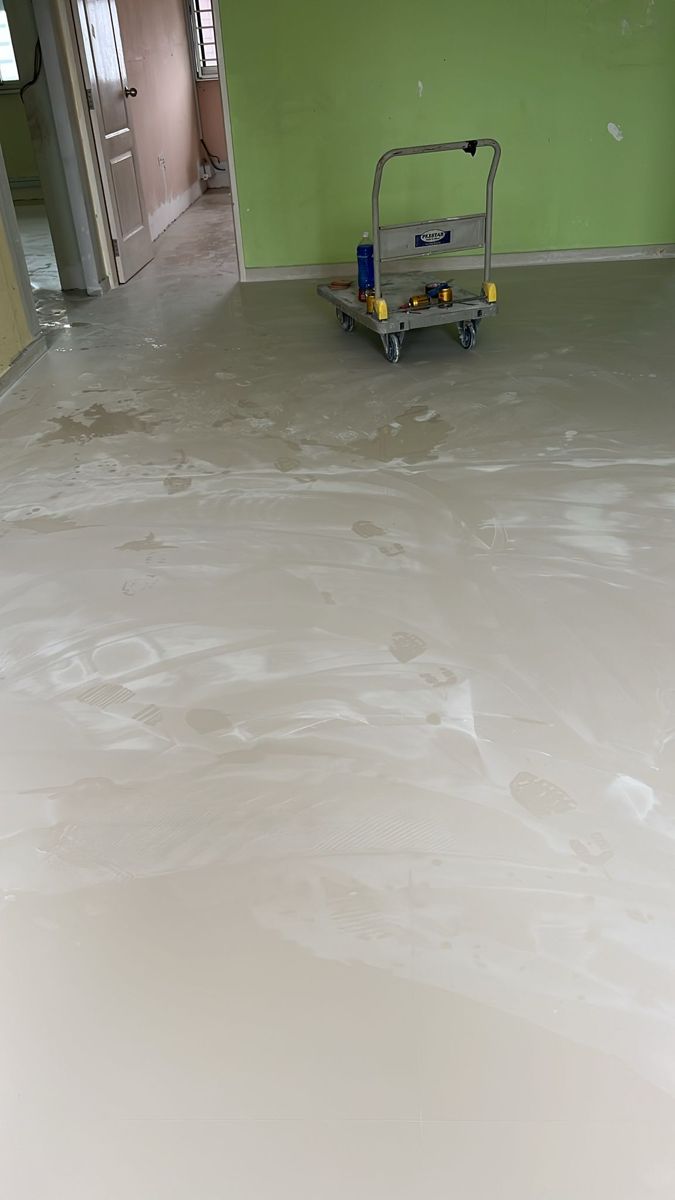
| Cement or grout haze after renovation | Avoid strong acids yourself | Almost always — polishing removes it evenly |
| Rust marks from metal furniture | Do not scrub with abrasive pads | If the mark is set into the surface |
What not to do
- Don't use steel wool or green scouring pads — they scratch the polish.
- Don't pour undiluted acid or bleach on the floor; it can dull polished tiles and damage grout.
- Don't keep adding more cleaner — buildup makes the haze worse.
Why polishing works on stubborn stains
When a polished tile surface wears, it becomes slightly more open and holds on to dirt. Polishing removes that worn layer and the stain trapped in it, then closes the surface back up with a fine-grit gloss. Floors are easier to keep clean afterwards.
If the stain is in the grout lines rather than the tiles, see our guide on black grout lines.
Related service: Homogeneous Tiles Polishing — from $2 per sq ft. Smaller areas quoted from photos on WhatsApp.