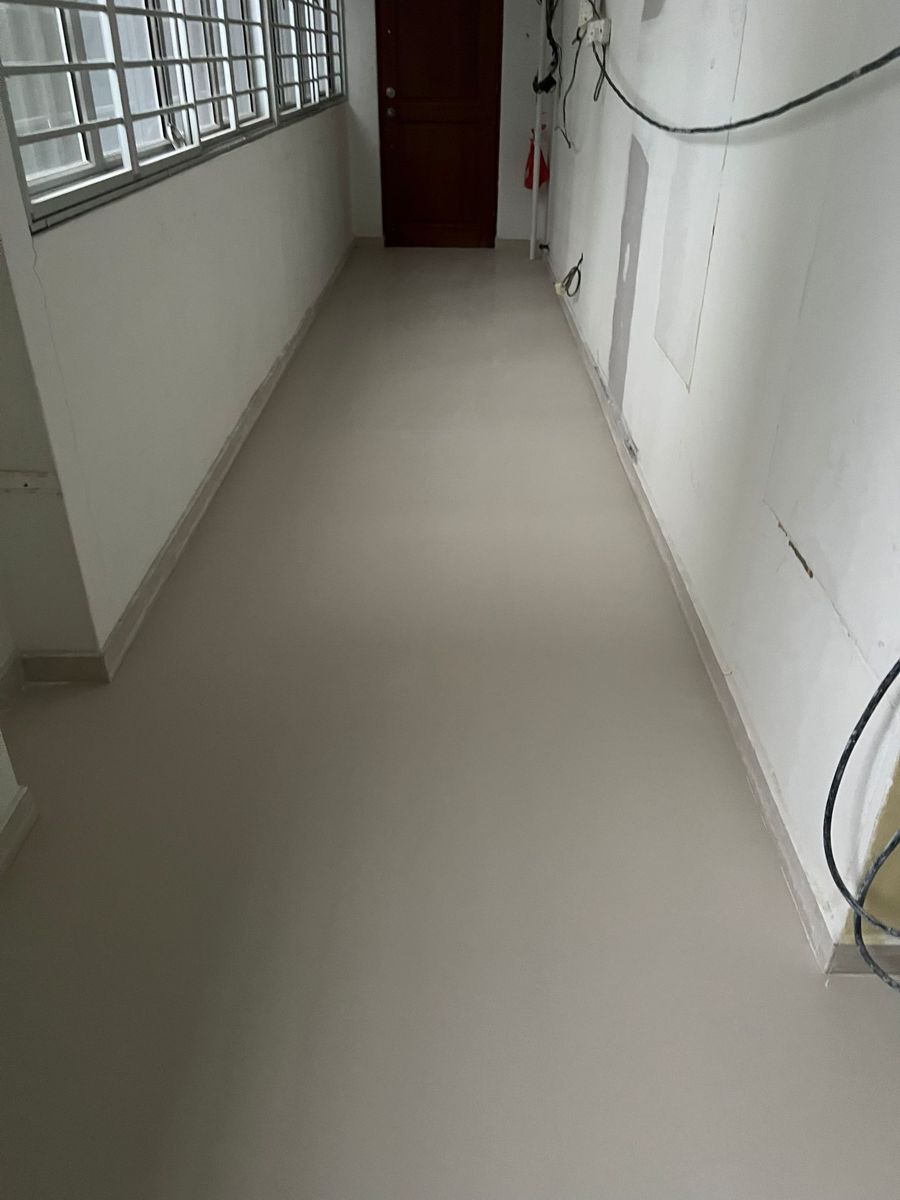
1. The factory polish has worn away
Polished homogeneous tiles leave the factory with a very thin, highly reflective top layer. Every day, grit carried in on shoes acts like sandpaper. Walkways from the door, kitchen and sofa wear down first, which is why you often see a matte path while corners still shine.
2. Cleaner residue builds up
Many floor cleaners leave a film behind. Using too much, or not rinsing, lets layers build up until the tile looks hazy and feels slightly sticky. Floors that are mopped with dirty water develop the same grey cast.
3. Harsh chemicals etch the surface
Bleach, strong alkaline degreasers and acid-based toilet or descaling cleaners can dull the surface of polished tiles over time, especially if left to sit.
4. Renovation haze
In new BTO flats and freshly renovated homes, a fine film of cement and grout often remains on the tiles after the contractor's cleaning. It looks like a cloudy bloom that never fully mops off.
How to tell which one you have
- Try a small area with warm water and a pH-neutral cleaner, then dry with a microfibre cloth. If it shines again, it was residue.
- If it stays matte, especially along walkways, the polish itself has worn — that needs machine polishing.
The fix: homogeneous tiles polishing
Professional polishing removes the worn surface layer with diamond pads, working from coarser to finer grits until the original gloss is rebuilt — often brighter than when the tile was new. It also cuts through residue and renovation haze in the same process. Prices start from $2 per sq ft.